Collections & Exhibits
Get a glimpse of our featured displays and see why the William Clark Market House Museum has become known as "Paducah's Most Interesting Place to Visit."
The Museum was called “a Paducah Treasure” by writers of Southern Living Magazine, Paducah Life Magazine, and many other esteemed periodicals. It has been featured on television in programs on HGTV, TLC, the History Channel, the Travel Channel, as well as Kentucky Educational Television.
We strive to offer, for public viewing, articles and exhibits that relate solely to the city of Paducah and its admirable history.
Pictured: Irvin S. Cobb and Alben W. Barkley
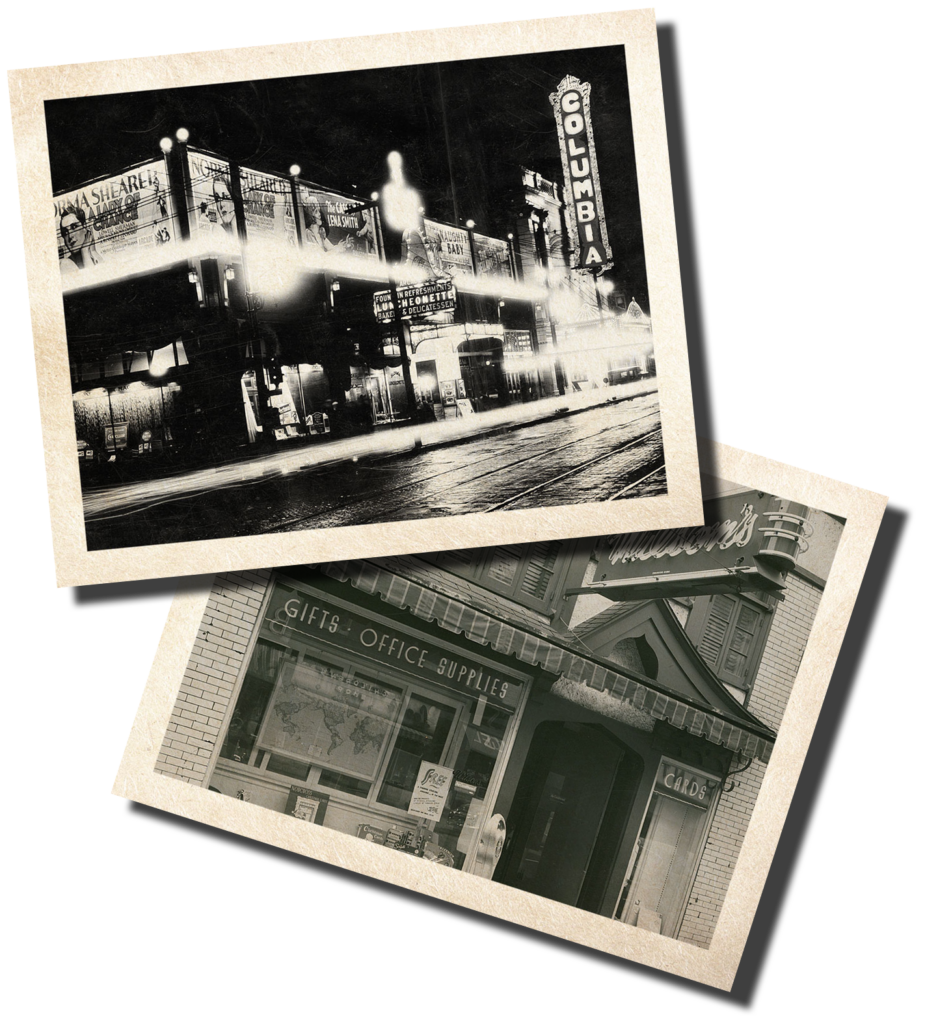
Historic PHOTOGRAPHS OF PADUCAH Collection
The Museum has a repository of almost 7,000 rare, historic photographs of Paducah.
The photographs are all digitized and kept in acid free protection. We do not include the photograph collection on our day to day tours, and the collection is viewable only by special appointment.
1913 LaFrance Fire Truck
This fire truck was bought from the city of St. Louis, MO ten years after it was bought new. The truck replaced 17 horse drawn fire wagons when it was purchased. A very rare, early Paducah fire call board stands behind the fire truck in our museum.
When acquired by the Museum, the fire truck was driven here through the open hole before the side doors for the museum were installed!
Hand-Carved Statue of Henry Clay
The statue was created by a twelve year old boy, George Theobald of Paducah, during the years 1852-1855. He was impressed by Clay’s lengthy obituary, citing his lifetime accomplishments, in the newspaper he had read. It was his first and last carving.
Theobald survived the Civil War but sadly, died in an epidemic in Paducah in his early twenties. The larger than life carving is made of yellow poplar wood.
1877 Drug Store Wooden Gingerbread Interior
This 1877 DuBois Robertson/List Drug Store Interior was reassembled within the Museum before the facility opened its doors to the public in June, 1968. It was given to the Museum by the granddaughter of the drug store’s original builder, Mrs. Ethel (Toots) DuBois Smith, along with $10,000 to help defray the cost of the reassembly. Smith was one of the Museum’s stalwart and dedicated supporters.
Eastlake architecture was highly popular in the 1880s. The upstairs level was a commercial drug supply enterprise and the lower level serviced public retail sales.
Vice President Alben Barkley Memorial Room
The Barkley Memorial Room upstairs on the balcony features items used by the Vice President that served under President Harry Truman. Barkley was a lifelong politician, and held many elected offices, including Senate majority leader.
See photos of the family and furniture of Barkley’s home. The first ever Vice Presidential Flag can be seen, as it was created for Barkley by Trumans’ executive order. Until then, there was no official VP flag!
Paducah's Civil War History
Paducah’s involvement in the Civil War is depicted in several cases on the first and second floors of the Museum.
Downstairs is the Kentucky Orphan Brigade exhibit and the Captain Koger/United Daughters of the Confederacy exhibit. Also to be seen upstairs is a quilt made entirely by Mrs. Robert E. Lee, beautiful rosewood furniture used by two generals while in Paducah, Lew Wallace, who later wrote Ben Hur, and Ulysses S. Grant.
Also seen are two tapestry chairs used by the Lincolns during the short months of his second term. The piano upstairs used to be in the Tilghman home and dates to 1852.